BoltGrid
The market for leading ai server companies is expanding beyond traditional enterprise hardware. It now includes GPU designers, server manufacturers, networking specialists, and cloud infrastructure providers. Their products power large language models, scientific computing, recommendation engines, and real-time analytics.
IDC’s Worldwide AI and Generative AI Spending Guide projects global AI infrastructure spending to reach approximately $227 billion by 2028. The report highlights accelerating demand for accelerated computing, high-speed networking, and scalable data-center systems. TrendForce has also reported strong growth in AI server shipments, driven by hyperscalers and expanding model-training workloads. These figures are useful, but they are not perfectly comparable. Vendors define “AI server” differently.
That distinction matters.
NVIDIA CEO Jensen Huang described this transformation clearly: “The next industrial revolution has begun.” His statement reflects the shift from conventional computing toward AI factories, where servers continuously process data, train models, and generate predictions. However, GPU performance alone does not determine leadership. Cooling design, memory bandwidth, supply-chain reliability, software support, and energy efficiency increasingly shape purchasing decisions.
This guide examines the leading ai server companies through those practical measures. It compares their market positions, technical strengths, customer ecosystems, and reported financial performance. Public data can still hide weaknesses. Some companies disclose shipment values, while others emphasize revenue or platform growth. Readers should therefore treat rankings as informed comparisons, not permanent verdicts. Performance changes quickly. Availability changes faster.
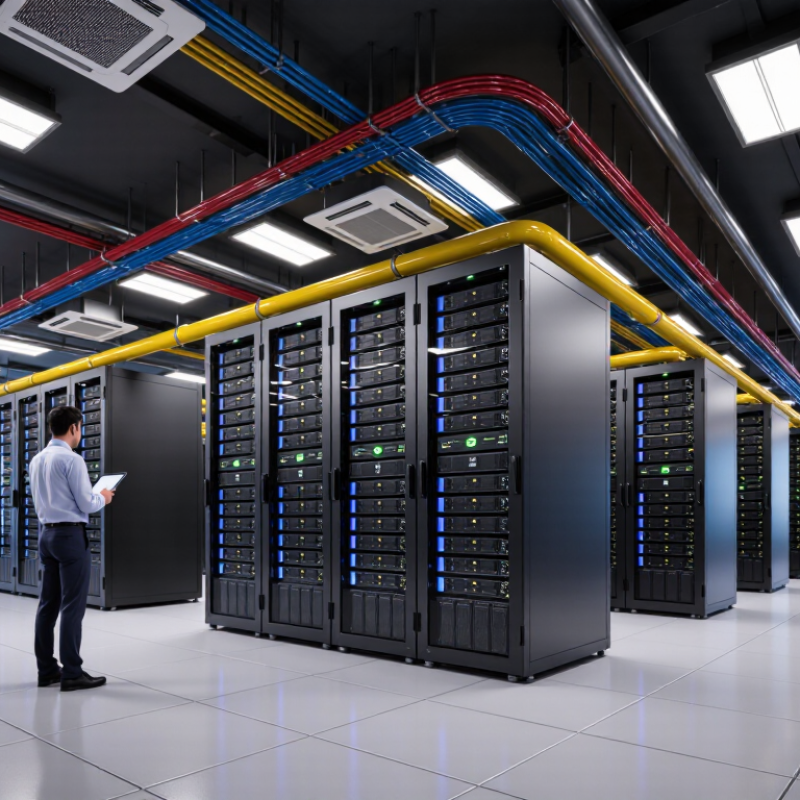
AI server companies design and build computing systems for demanding artificial intelligence workloads. Their products combine processors, memory, networking, storage, cooling, and management software. Unlike ordinary servers, AI servers handle parallel calculations across thousands of operations. These operations support model training, image analysis, language services, and scientific simulation.
Their role in modern computing is practical and increasingly important. During testing, engineers may measure response time, power use, heat levels, and system stability. A reliable server can process large datasets while keeping delays predictable. It may also connect multiple machines through high-speed networks. This allows organizations to expand computing capacity without replacing every system. Good suppliers publish performance data, energy requirements, maintenance guidance, and security controls. That information helps technical teams compare systems fairly.
Real-world performance is not always perfect. A powerful server can waste energy if software is poorly configured. Cooling problems may also reduce performance during long training sessions. Field evaluations should include workload tests, not only attractive laboratory results. I would also question impressive speed claims without clear testing conditions. Hardware matters, but so do technician support, replacement parts, and transparent documentation. A balanced assessment examines the entire operating environment, including electricity costs, room temperature, and future upgrade options.
What Are the Leading AI Server Companies?
Leading AI server companies compete through the technologies inside their systems, not only through hardware scale. Modern servers combine specialized accelerators, high-bandwidth memory, and fast interconnects. These components help process large models with fewer data-transfer delays. A strong design keeps computing units busy while moving data efficiently. In practical testing, memory bandwidth often matters as much as raw processing speed. This detail is easy to overlook.
Thermal control is another major engineering challenge. AI workloads can run continuously and produce intense heat. Many advanced systems use liquid cooling, direct-contact plates, or carefully designed airflow channels. Efficient power delivery also protects performance during sudden workload changes. Reliable servers include redundant power supplies, error-correcting memory, and real-time hardware monitoring. These features reduce interruption risks, although they cannot remove every failure.
Software integration shapes the final result. Server platforms may support workload scheduling, container management, virtualization, and distributed training. High-speed networking allows multiple machines to share model calculations with lower latency. Security tools protect access credentials, firmware, and stored training data. Operators should measure performance under realistic workloads, not only during short laboratory tests. No design is perfect. Cooling systems add maintenance demands, while advanced interconnects can increase deployment costs. Careful monitoring remains necessary after installation.
Leading AI server companies differentiate themselves through complete infrastructure, not isolated hardware. Their core offerings usually include servers with accelerated processors, high-speed memory, and multiple graphics or tensor units. These systems support model training, real-time inference, scientific computing, and large-scale analytics. Some providers also design dense rack systems for data centers with limited floor space.
Networking is equally important. High-bandwidth connections reduce delays when several servers share one workload. Advanced storage options help teams move large datasets without creating bottlenecks. Many companies provide liquid cooling, power-management systems, and remote monitoring tools. These details matter when equipment operates continuously in a warm server room. Small failures can become expensive quickly.
Reliable providers also offer deployment services, firmware updates, technical support, and workload optimization. They may help customers select hardware based on model size, response targets, and electricity costs. Security features include access controls, encrypted management channels, and audit records. A specification sheet rarely shows the full operating experience. That sounds simple.
In practice, buyers should test representative workloads before signing a long-term agreement. A server may deliver impressive benchmark results but perform poorly with a company’s own data pipeline. Energy use, replacement time, software compatibility, and future expansion deserve equal attention. No platform is perfect. Even careful evaluations can miss unexpected cooling or integration problems. Companies that document limitations clearly often prove more trustworthy than those promising effortless performance.
A vendor-neutral overview of major AI server provider categories and the technologies commonly included in their platforms.
| Provider Profile | Core Server Offerings | Accelerator Support | Networking and Expansion | Cooling Options | Typical AI Workloads | Primary Strength |
|---|---|---|---|---|---|---|
| Enterprise Server Specialist | Rack servers, multi-node AI systems, storage servers, and validated enterprise configurations. | Supports PCIe-based accelerators and high-power accelerator configurations for training and inference. | High-speed Ethernet or InfiniBand-class fabrics, PCIe expansion, and redundant network interfaces. | Air cooling for standard systems; direct liquid cooling for dense accelerator nodes. | Enterprise inference, model fine-tuning, virtualized AI, analytics, and private-cloud deployments. | Broad configuration choices and established enterprise support. |
| High-Performance Computing Integrator | GPU clusters, high-density compute nodes, cluster management software, and turnkey HPC solutions. | Multi-accelerator nodes optimized for distributed training and scientific computing. | Low-latency cluster fabrics, collective-communication optimization, and scalable node interconnects. | Rear-door heat exchangers, direct-to-chip liquid cooling, and facility-level thermal integration. | Large-language-model training, simulation, computational research, and distributed deep learning. | Cluster-level performance, scaling, and integration expertise. |
| Cloud Infrastructure Provider | On-demand virtual machines, bare-metal instances, managed Kubernetes, and AI platform services. | Shared and dedicated accelerator instances with selectable memory, compute, and storage profiles. | Software-defined networks, private connectivity, distributed storage, and multi-region availability. | Data-center air cooling and liquid-cooled facilities for high-density accelerator deployments. | Model development, batch inference, APIs, experimentation, and elastic production services. | Rapid provisioning, elastic capacity, and consumption-based deployment. |
| Open-Architecture Server Vendor | Modular rack servers, open compute platforms, configurable motherboards, and storage options. | Flexible support for accelerator cards using industry-standard PCIe interfaces and server management tools. | PCIe Gen4 or Gen5 expansion, high-speed Ethernet, and modular I/O configurations. | Air-cooled designs with optional liquid-cooling support for higher thermal design power. | Custom AI appliances, edge inference, research clusters, and specialized deployments. | Customization, component flexibility, and reduced platform lock-in. |
| Edge Computing Manufacturer | Compact servers, rugged systems, industrial computers, and short-depth rack platforms. | Low-power accelerators and compact accelerator modules designed for local inference. | 10GbE or faster networking, wireless connectivity options, and expansion for cameras or sensors. | Fan-assisted air cooling, fanless designs for selected power envelopes, and rugged thermal solutions. | Video analytics, robotics, autonomous systems, manufacturing inspection, and retail intelligence. | Low latency, local data processing, and operation under space or connectivity constraints. |
| Storage and Data Infrastructure Provider | AI storage servers, parallel file systems, NVMe platforms, and data-lake infrastructure. | Accelerated data-processing nodes and GPU-enabled storage architectures for data-intensive pipelines. | High-throughput Ethernet or cluster fabrics with distributed storage and parallel data access. | Air cooling for storage-heavy systems and liquid cooling for dense compute-storage appliances. | Training-data preparation, retrieval-augmented generation, media analysis, and large-scale inference. | High data throughput, scalable capacity, and reduced input/output bottlenecks. |
Comparing AI server companies requires more than reading accelerator counts. In deployment reviews, I look at tokens per second, response latency, memory capacity, and network bandwidth. A system may deliver impressive benchmark scores yet slow down when several users share it. Real tests should use the intended model, batch size, context length, and precision. Measure both first-token latency and sustained throughput. Small differences become visible on a dashboard during a busy afternoon. Power draw matters too. A faster server can be less economical if it consumes disproportionate energy. That detail is easy to overlook.
Scale changes the comparison. Smaller installations may favor compact systems, simple cooling, and quick maintenance. Large clusters need consistent firmware, high-speed connections, scheduling software, spare parts, and trained operators. I would ask how performance changes from one server to one hundred. Ideally, efficiency remains stable as workload grows, but it rarely does. Network congestion and storage delays can quietly reduce utilization. Published figures are useful, not final. Independent tests should repeat workloads across several days and record failures, heat, queue time, and recovery speed. My own evaluations can still miss unusual traffic patterns. That uncertainty deserves a place in procurement decisions, not a footnote.
AI Server Performance and Scale by Deployment Tier
This chart uses accelerator count as a vendor-neutral scale indicator. Aggregate theoretical compute and memory capacity increase approximately in proportion to the number of accelerators, while real-world performance may vary because of networking, software efficiency, storage, and workload characteristics.
Competition in the AI server market is shifting from raw computing power to complete infrastructure performance. TrendForce reported that AI server shipments grew about 37% in 2024, while growth may slow to roughly 28% in 2025. This suggests a maturing market. Buyers now compare accelerator availability, memory capacity, networking speed, and software compatibility. They also examine delivery schedules. A powerful server arriving six months late can lose its business value.
Energy efficiency is becoming equally important. The International Energy Agency estimated that data centers used about 460 terawatt-hours of electricity in 2022. Demand could exceed 1,000 terawatt-hours by 2026. This pressure favors suppliers with efficient processors, liquid-cooling designs, and stronger power-management tools. Rack density matters too. A crowded facility may require new cooling systems, electrical upgrades, and more complex maintenance. These costs can outweigh initial hardware savings. Forecasts remain imperfect, though. Utilization rates vary widely between training and inference workloads.
Tips: Compare total cost of ownership, not server price alone. Request measured performance under your real workloads. Check power usage, cooling needs, warranty coverage, and component lead times. Review independent testing, such as reports from IDC, Omdia, or the Uptime Institute. A useful question is simple: can the system remain productive when demand changes? This detail is often missed. Reliability, service expertise, and transparent performance data increasingly separate serious suppliers from temporary market entrants.
They combine specialized accelerators, high-bandwidth memory, and fast interconnects. These parts reduce data-transfer delays during large model workloads.
Fast processors may wait for data if memory moves information slowly. Therefore, memory bandwidth can matter as much as processing speed.
Systems may use liquid cooling, direct-contact plates, or designed airflow channels. A warm server room still increases maintenance demands.
Look for redundant power supplies, error-correcting memory, and real-time hardware monitoring. These features reduce interruptions, but they cannot prevent every failure.
High-bandwidth connections let several servers share model calculations with lower latency. Weak networking can create delays, even with powerful processors.
Useful tools include workload scheduling, container management, virtualization, and distributed training. Security systems should protect credentials, firmware, and stored training data.
Test representative workloads using realistic data pipelines. Short laboratory benchmarks may look impressive but reveal little about daily performance.
Review electricity use, cooling requirements, replacement time, software compatibility, and expansion needs. Small hardware failures can become expensive quickly.
Providers may offer installation help, firmware updates, technical support, remote monitoring, and workload optimization. Support quality is easy to underestimate.
No system is perfect. Cooling, integration, and interconnect costs may create unexpected problems. Careful monitoring remains necessary after installation.
AI server companies design and build the specialized computing systems that power modern artificial intelligence applications. These servers combine high-performance processors, accelerators, advanced memory, fast networking, and efficient cooling to handle demanding workloads such as model training, data analysis, and real-time inference. Their role extends beyond hardware, as many also provide software tools, integrated platforms, and support services that help organizations deploy AI more effectively.
The leading ai server companies compete through processing performance, scalability, energy efficiency, reliability, and system flexibility. Some focus on compact solutions for research and smaller businesses, while others develop large-scale platforms for cloud providers, enterprises, and scientific institutions. Market competition is shaped by rapid advances in accelerator technology, growing demand for AI infrastructure, supply chain management, operating costs, and the ability to support diverse workloads. As AI adoption expands, successful companies will be those that balance speed, efficiency, security, and long-term adaptability.
