BoltGrid
Edge intelligence is moving from experimental deployments into factories, hospitals, retail sites, and transport networks. IDC forecasts worldwide edge computing spending will approach $317 billion by 2026, covering hardware, software, and services. That expansion creates a practical question: which supplier can deliver dependable systems beyond the data center?
AI workloads are also reshaping server demand. IDC’s Worldwide AI and Generative AI Spending Guide projects global AI spending will reach $632 billion by 2028. However, cloud-scale figures do not automatically validate an edge platform. Edge installations face tighter limits, including restricted rack space, unstable connectivity, dust, vibration, and local power constraints.
The best edge ai server manufacturer must therefore balance inference performance with operational resilience. Buyers should examine GPU or accelerator options, memory bandwidth, thermal design, remote management, cybersecurity controls, and long-term component availability. A compact server running beside a production line may have greater business value than a larger system located hundreds of kilometers away.
Latency matters most.
MarketsandMarkets has identified edge AI as a fast-growing segment, driven by real-time analytics, computer vision, and autonomous decision-making. Yet market forecasts can appear optimistic. Actual returns depend on deployment quality, maintenance access, and the cost of replacing failed hardware.
This guide evaluates leading Chinese edge AI server manufacturers for global buyers. It focuses on measurable capabilities, documented experience, export readiness, and support quality. Product brochures are useful, but field evidence matters more. Some comparisons remain imperfect because vendors disclose specifications differently. That limitation deserves attention, not concealment.
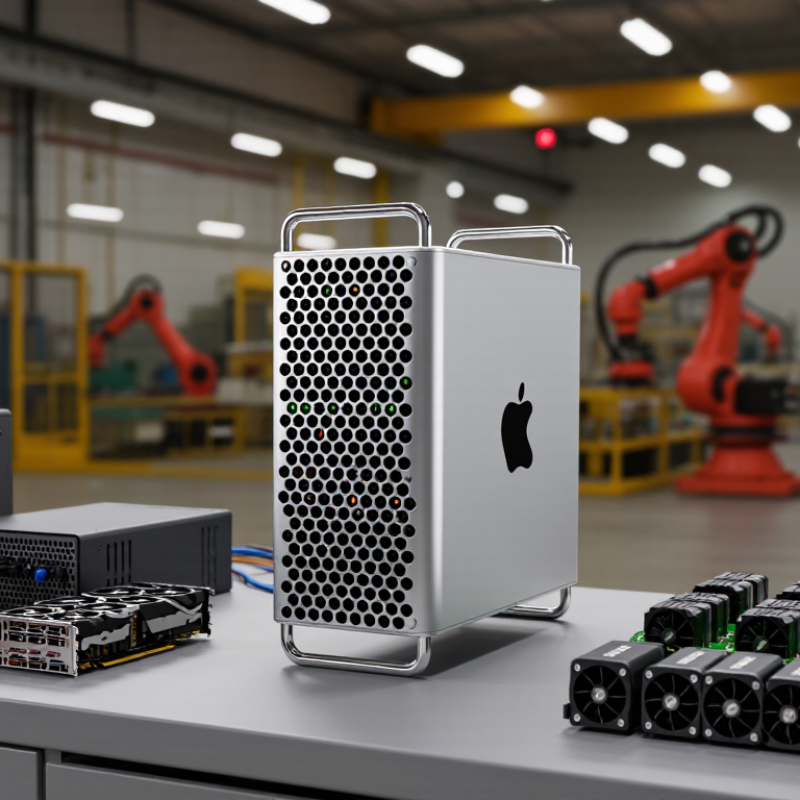
Edge AI servers are compact computing systems placed near cameras, sensors, machines, or local data networks. They process AI workloads without sending every image or signal to a distant cloud. Latency matters. A factory can detect a damaged component within milliseconds, while a remote cloud connection may introduce delay.
These servers typically combine CPUs, accelerators, high-speed memory, secure storage, and rugged cooling systems. Their value depends on more than raw performance.
Buyers should examine power consumption, operating temperature, remote management, model compatibility, and long-term maintenance. The term edge is still used too loosely. A small server is not automatically an edge server.
China matters because its manufacturing ecosystem connects component sourcing, board assembly, thermal design, and system integration at significant scale. This can support competitive pricing and flexible configurations for global buyers. However, lower cost should never replace verification. Buyers need documented benchmark results, firmware security procedures, warranty terms, export compliance, and reliable technical support. Independent testing is especially important when servers operate in factories, hospitals, transport facilities, or retail sites.
A practical evaluation may begin with a short pilot using real camera feeds and realistic temperature conditions. Synthetic tests can look impressive. Field performance may differ. Power stability, network interruptions, and dust exposure often reveal weaknesses that specifications overlook. Clear documentation and traceable quality controls help buyers compare manufacturers with greater confidence.
China’s edge AI server manufacturers increasingly focus on compact, high-performance systems for factories, transport hubs, hospitals, and retail sites. Their designs combine multicore CPUs with dedicated AI accelerators, allowing cameras, sensors, and language models to run closer to users. This reduces cloud traffic and can improve response times. The hardware must also tolerate dust, vibration, heat, and unstable network conditions.
A key technology is heterogeneous computing. Different processors handle vision inference, data management, and general workloads more efficiently. Engineers commonly use model quantization, pruning, and optimized inference libraries to reduce memory use. These methods help servers process video streams with lower power consumption.
However, compressed models may lose accuracy in unusual lighting or crowded scenes. That trade-off deserves testing.
For global buyers, containerized software and standard interfaces simplify deployment across different sites. Remote monitoring can track temperature, accelerator load, storage health, and failed services. Secure boot, encrypted communication, role-based access, and signed updates are also essential for responsible operation.
In practical evaluations, buyers should test latency, sustained performance, recovery after power loss, and integration with existing systems. Benchmark figures alone can mislead. Field conditions matter more. Some specifications remain difficult to compare because manufacturers measure performance differently. A careful pilot project often reveals limitations that brochures overlook.
China’s leading edge AI server manufacturers are moving from general-purpose hardware toward compact, workload-specific systems. IDC’s Worldwide Artificial Intelligence and Generative AI Spending Guide projects strong double-digit growth in AI infrastructure spending through 2028. Chinese suppliers are responding with short-depth servers, accelerator modules, and ruggedized designs for factories, hospitals, ports, and retail sites.
Thermal control matters. A factory cabinet may face dust, vibration, and limited airflow. Manufacturers in Shenzhen, Beijing, and Shanghai increasingly offer liquid-assisted cooling, redundant power supplies, and remote monitoring tools. Gartner’s research on edge computing emphasizes distributed processing, lower latency, and operational resilience. In practice, buyers should request measured inference latency, sustained performance, and failure-recovery data. Peak benchmark scores can mislead.
Supply-chain depth remains a practical advantage. Domestic access to chassis fabrication, power systems, networking components, and board assembly can shorten customization cycles. Yet quality varies. Some product pages provide impressive specifications but limited field evidence. That deserves scrutiny. Buyers should verify ISO 9001 processes, electromagnetic compatibility testing, firmware update policies, and spare-part availability. The Uptime Institute also stresses maintainability and power resilience in infrastructure evaluation. A reliable Chinese manufacturer should provide clear test reports, transparent thermal limits, and support in the buyer’s time zone. Small details matter.
Top China Edge AI Server Manufacturers for Global Buyers
Comparing manufacturers for global procurement requires more than checking processor lists and quoted prices. Study how each supplier designs for heat, dust, vibration, and unstable network conditions. Request a sample unit and test it with your actual camera feeds, models, and storage workload. A server that performs well in a showroom may throttle inside a factory cabinet.
Examine processor options, accelerator compatibility, memory expansion, and remote management tools. Confirm whether the supplier provides firmware updates, security patches, and clear lifecycle policies. Ask for thermal test reports, burn-in records, and component traceability. Independent certifications can support trust, but verify their scope and validity. Paperwork alone is not proof.
Global buyers should compare warranty response times, spare-part locations, packaging quality, and customs documentation. Ask who handles failures after delivery. A practical service agreement should define replacement windows and escalation contacts. Calculate total cost, including power use, shipping, duties, integration, and field maintenance. The cheapest quotation may become expensive later. It happens.
Evaluate production capacity through small pilot orders before committing to volume. Check whether the factory can maintain identical configurations across shipments. Request references from similar operating environments, while recognizing that references may not reflect your workload. I would also document every technical promise in the contract. Verbal assurances are easy to misunderstand. Leave room for revision, because edge deployments often reveal unexpected bandwidth, cooling, or software limitations.
China-based edge AI server manufacturers attract global buyers through flexible configurations, competitive pricing, and fast production cycles. IDC’s Worldwide Edge Spending Guide estimated global edge spending at about US$232 billion in 2024. It also projects roughly US$350 billion by 2027. Buyers should verify processor availability, accelerator export classification, and final-use documentation before signing purchase orders. A low quotation can become expensive after customs checks, local certifications, and replacement shipping.
Compliance needs more than a familiar conformity mark. Confirm electrical safety, electromagnetic compatibility, radio requirements, environmental rules, and data-security obligations in each destination. NIST’s AI Risk Management Framework recommends documented risk controls across an AI system’s lifecycle. Ask for a software bill of materials, firmware update policy, vulnerability response process, and secure remote-management design. Uptime Institute’s outage research repeatedly identifies power, cooling, and human-error issues as major operational risks. Therefore, request thermal test results at the intended altitude and ambient temperature, not only laboratory figures.
Tips: Require a pre-shipment sample and test it with your actual model. Check boot time, inference latency, power draw, and fan noise. Put spare-part availability and response times into the contract. Keep two replacement units for remote sites. This is not always economical, but one failed server can cost more than the inventory. Also, leave room for review. Documentation may be complete while field support remains slow. A video call with the engineering team often reveals more than a polished datasheet.
| Evaluation Area | Typical Data Point | Common China-Sourced Edge AI Server Range | Global Buyer Relevance | Recommended Verification Evidence |
|---|---|---|---|---|
| Form Factor | Deployment size and mounting method | Short-depth 1U–2U rack servers, wall-mount systems, and compact fanless units | Determines compatibility with telecom cabinets, retail sites, factories, and transportation environments | Mechanical drawings, rack-unit dimensions, mounting-hole layout, and installation photographs |
| Compute Architecture | Processor type and core-count class | x86 systems with approximately 8–64 CPU cores; Arm-based systems commonly offering 8–64 cores | Affects software compatibility, virtualization, inference latency, and energy consumption | Processor specification sheet, supported operating-system list, and independent benchmark results |
| AI Acceleration | GPU, NPU, FPGA, or accelerator support | One to four accelerator cards or integrated AI modules; approximately 30–400 W accelerator power per device | Supports computer vision, predictive maintenance, video analytics, and local generative-AI inference | Thermal design power, PCIe or module compatibility, model-support matrix, and measured inference tests |
| Memory and Storage | RAM capacity, storage type, and redundancy | 32–512 GB ECC memory; NVMe or SATA storage; optional RAID 1, RAID 5, or RAID 10 | ECC memory improves data integrity; storage redundancy reduces downtime from drive failure | Memory population guide, drive compatibility list, RAID-controller details, and burn-in report |
| Environmental Conditions | Operating temperature, humidity, and vibration tolerance | Standard configurations commonly support approximately 10–35°C; ruggedized models may support wider ranges | Critical for unmanned sites, industrial floors, roadside cabinets, and outdoor enclosures | Environmental test report, fan and filter specifications, ingress-protection rating where applicable, and derating curves |
| Power and Cooling | Power supply capacity and cooling method | 300–2,000 W AC power supplies; redundant power options are common in rack systems | Determines electrical-site requirements, operating cost, thermal load, and resilience | Maximum-load power measurements, efficiency certification, PSU input-voltage range, and cooling diagram |
| Connectivity | Network ports and industrial interfaces | 1–8 Ethernet ports, commonly including 1GbE or 10GbE; optional serial, CAN, GPIO, or cellular interfaces | Enables integration with cameras, PLCs, sensors, private networks, and edge gateways | Port map, driver list, network-throughput test, wireless approvals, and protocol compatibility statement |
| Export Documentation | Documents needed for international shipment | Commercial invoice, packing list, certificate of origin where required, HS classification, and shipping marks | Accurate documents reduce customs delays, classification disputes, and unexpected import charges | Pre-shipment document set, HS-code confirmation, country-of-origin declaration, and Incoterms quotation |
| Product Compliance | Electrical, EMC, chemical, and safety requirements | Typical target documentation includes CE, FCC, RoHS, REACH, UKCA, RCM, or CB evidence depending on destination | Requirements vary by country, product configuration, radio functions, and intended installation environment | Accredited laboratory reports, declarations of conformity, technical file, and component-level compliance records |
| Cybersecurity | Secure boot, firmware control, and vulnerability management | Common requirements include TPM support, signed firmware, BIOS passwords, role-based access, and update procedures | Important for critical infrastructure, healthcare, manufacturing, and connected retail deployments | SBOM, vulnerability-disclosure policy, firmware signing process, penetration-test summary, and patch-support commitment |
| Software Deployment | Operating systems, containers, and orchestration | Linux and Windows support is common; containerized deployment with Docker or Kubernetes is frequently available | Reduces integration effort and supports remote fleet management across multiple locations | Validated image, driver package, API documentation, remote-management guide, and rollback procedure |
| Quality Assurance | Production testing and traceability | Typical controls include incoming inspection, assembly testing, memory tests, storage tests, thermal testing, and final burn-in | Traceability helps buyers manage warranty claims and maintain consistent performance across volume orders | Sample inspection plan, serial-number traceability, factory audit records, and pre-shipment inspection report |
| Warranty and Service | Warranty period, replacement process, and technical support | One- to three-year limited warranty is common; optional extended warranty, spare parts, and remote support may be available | Service terms influence total cost of ownership and downtime risk after deployment | Written warranty, response-time SLA, RMA workflow, spare-parts policy, and escalation contacts |
| Customization | Hardware, firmware, enclosure, and labeling options | Common options include memory and storage changes, port combinations, BIOS settings, private labeling, and localized packaging | Allows the system to meet local regulations, customer branding rules, and site-specific connectivity needs | Approved configuration control document, engineering-change process, sample approval, and minimum-order terms |
| Deployment Readiness | Pilot-to-volume delivery capability | Pilot quantities may begin with a small engineering batch; production planning should define lead time, allocation, and component substitutions | A documented ramp plan reduces delays when deploying hundreds or thousands of edge nodes | Pilot acceptance criteria, production lead-time schedule, continuity plan, approved vendor list, and end-of-life notification policy |
Note: The ranges shown are indicative market specifications for China-sourced edge AI server configurations. Final compliance, performance, and export requirements must be verified for the exact model, configuration, and destination country.
It processes camera, sensor, and language-model data near the operating site. This can reduce cloud traffic and improve response times. Faster locally.
Factories, transport hubs, hospitals, and retail sites often need rugged systems. Servers may face dust, vibration, heat, and unstable networks. Showroom tests are insufficient.
Different processors manage vision inference, data handling, and general workloads. This approach can improve efficiency and reduce power consumption. The design still needs workload testing.
They reduce model size and memory use. They can also lower power requirements during video processing. Accuracy may drop in crowded scenes or unusual lighting. That trade-off deserves honest testing.
Use actual camera feeds, models, and storage workloads. Measure latency, boot time, power draw, fan noise, and sustained performance. Test recovery after power loss. Benchmarks can mislead.
Compare processor choices, accelerator support, memory expansion, and remote monitoring tools. Check temperature, storage health, accelerator load, and failed-service alerts. Containerized software can simplify deployment across multiple sites.
Look for secure boot, encrypted communication, role-based access, and signed updates. Request firmware policies, vulnerability response procedures, and software component records. Remote management must be designed carefully. Convenience can create risk.
Confirm destination safety, electromagnetic, environmental, and data-security requirements. Check processor availability, export classification, customs paperwork, and local certification needs. Calculate power, shipping, duties, integration, and maintenance costs. The cheapest quote may not stay cheap.
Define replacement windows, escalation contacts, spare-part locations, and response times. Keep replacement units for remote sites when practical. It may seem expensive. One failure can cost more than planned inventory.
A pilot reveals cooling, bandwidth, software, and support limitations before volume purchases. It also tests configuration consistency across shipments. Document every technical promise. Verbal assurances are easy to misunderstand.
Edge AI servers bring computation, storage, and artificial intelligence capabilities closer to where data is generated, enabling faster response times, improved privacy, and reduced reliance on distant cloud platforms. China has become an important source of these systems because of its extensive electronics manufacturing capacity, strong supply chains, and growing expertise in processors, accelerators, thermal management, networking, and industrial integration. Chinese solutions can support applications such as smart manufacturing, transportation, retail analytics, energy management, and other data-intensive environments.
For global buyers, selecting the right edge ai server manufacturer requires more than comparing prices. Important factors include processing performance, expandability, power efficiency, ruggedness, operating-system compatibility, security features, product customization, and long-term availability. Buyers should also review export documentation, certifications, regional compliance requirements, warranty terms, technical support, spare-parts access, and deployment services. A reliable supplier should communicate clearly, provide transparent specifications, support testing before shipment, and offer practical assistance throughout installation and maintenance.
