BoltGrid
Choosing the 2026 best industrial ai server manufacturer requires more than comparing processor counts. Industrial AI workloads run beside robotic arms, inspection cameras, digital twins, and control systems. They need predictable latency, strong thermal design, secure remote management, and long hardware lifecycles. A server that performs well in a laboratory may struggle beside dust, vibration, or unstable factory temperatures.
Industry demand is moving quickly. IDC’s Worldwide AI and Generative AI Spending Guide projects global AI spending will reach approximately $632 billion by 2028, with infrastructure remaining a major investment area. The Stanford AI Index Report 2025 also reported that 78% of organizations used AI during 2024. These figures suggest growing demand, but they do not prove that every industrial ai server manufacturer offers dependable factory performance. Evidence still matters.
Look closely at field experience, not marketing language. Useful evidence includes measured inference latency, GPU availability, ECC memory protection, rack-density tests, and documented failure rates. Gartner’s research on AI infrastructure repeatedly emphasizes scalability, operational governance, and lifecycle management. Those factors matter when one server monitors thousands of images per hour. They also matter when replacing a failed component during a weekend shutdown.
No single vendor wins every deployment. That is the uncomfortable part. A compact edge server may suit machine vision, while a liquid-cooled rack system may suit model training. Buyers should compare independent benchmarks, warranty response, cybersecurity controls, and integration with existing PLC and MES platforms. The strongest manufacturer is not always the one with the fastest GPU. It is the partner that can prove stable performance after installation. Temporary speed is easy. Reliable production is harder.
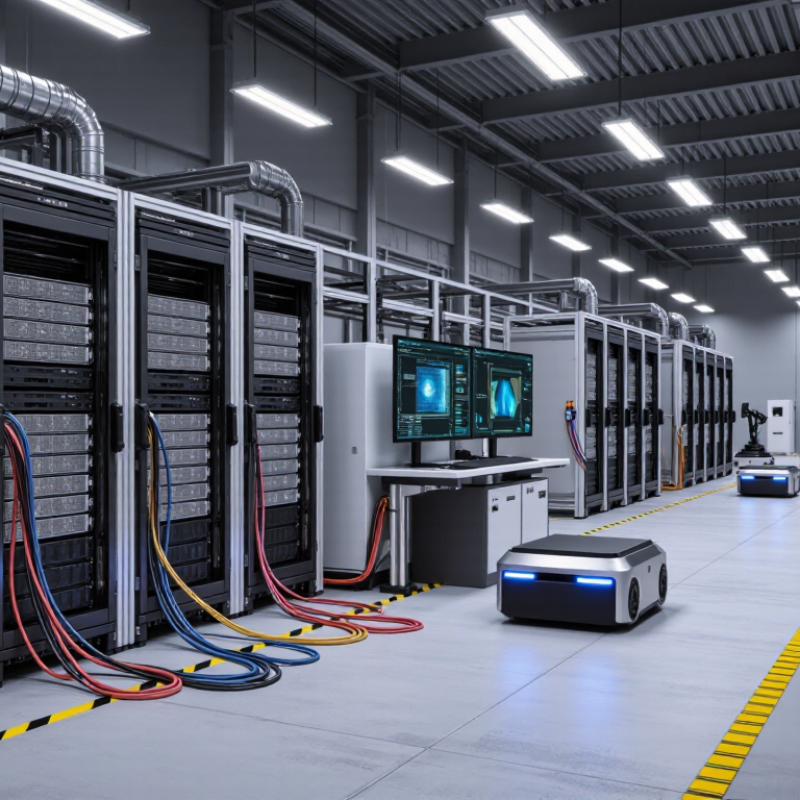
In 2026, an industrial AI server is more than a powerful computer in a factory. It is a rugged computing platform designed to process sensor, machine vision, robotics, and production data. Unlike ordinary data-center systems, it must handle dust, vibration, heat, and unstable network conditions. Its role is practical: convert operational data into faster, safer, and more consistent decisions.
A typical system combines accelerated processors, error-correcting memory, high-speed storage, and industrial communication interfaces. It may inspect welds through cameras, detect motor abnormalities, or adjust a robotic arm within milliseconds. Local processing reduces cloud dependence and limits delays. That matters when a packaging line cannot wait for a distant server. In field deployments, engineers should also check maintenance access, thermal design, cybersecurity controls, and compatibility with existing control systems.
The definition is still evolving. Some suppliers call compact edge computers industrial AI servers, while others reserve the term for rack-mounted platforms. That ambiguity matters. A reliable evaluation should use measurable conditions, including inference speed, uptime, operating temperature, expansion capacity, and long-term support. Real factories rarely match laboratory conditions. A model may perform well during testing but struggle with changing lighting, damaged sensors, or incomplete training data. Human review remains necessary. The best system is not always the fastest one; it is the one operators can understand, maintain, and trust during an unexpected production fault.
Technical comparison of representative industrial AI server configurations and the operational requirements they are designed to support.
| Industrial AI Server Profile | Primary Role in 2026 | Typical AI Workload | Accelerator Configuration | System Memory | Local Storage | Approx. Power Envelope | Operating Environment | Recommended Deployment |
|---|---|---|---|---|---|---|---|---|
| Compact Edge AI Server | Low-latency inference close to machines and sensors | Visual inspection, anomaly detection, predictive maintenance | 1 low- to mid-power accelerator; 8–32 GB dedicated AI memory | 32–128 GB ECC memory | 1–4 TB NVMe SSD, optional mirrored storage | 150–500 W | 0–45 °C typical; extended-temperature options available | Factory floors, machine cabinets, remote production cells |
| Ruggedized Edge AI Server | Reliable AI processing in harsh or space-constrained locations | Robotics, mobile equipment, transportation monitoring | 1–2 accelerators optimized for inference efficiency | 32–128 GB ECC memory | 1–8 TB industrial NVMe or SATA SSD | 200–700 W | Approximately -20–55 °C with shock, vibration and dust protection options | Outdoor cabinets, mining, logistics, energy and transportation sites |
| Industrial Rack AI Server | Centralized inference and analytics for multiple production lines | Multi-camera inspection, digital twins, production optimization | 2–4 high-performance accelerators with high-speed interconnects | 128–512 GB ECC memory | 4–16 TB NVMe with RAID support | 1.5–4 kW | 18–27 °C recommended data-center or industrial server-room range | Plant-level data centers, control rooms and private industrial clouds |
| AI Training and Simulation Server | Model training, fine-tuning and engineering simulation | Large vision models, multimodal models, synthetic-data generation | 4–8 high-memory accelerators with peer-to-peer communication | 256 GB–2 TB ECC memory | 8–30 TB NVMe with enterprise RAID | 4–12 kW | Controlled data-center environment with high-capacity cooling | Corporate AI laboratories, engineering centers and private clouds |
| High-Availability Industrial AI Server | Continuous AI services with minimized production downtime | Safety monitoring, quality control, process optimization | 2–4 accelerators; redundant compute, power and network options | 128–512 GB ECC memory | 4–16 TB mirrored or RAID-protected storage | 1.5–5 kW | Controlled industrial room; redundant cooling recommended | Mission-critical manufacturing and utility operations |
| AI Storage and Data Pipeline Server | Collecting, labeling, caching and serving industrial datasets | Video retention, sensor fusion, dataset preparation and model monitoring | Optional 1–2 inference accelerators | 128–512 GB ECC memory | 20–200 TB expandable storage with RAID or erasure coding | 800 W–3 kW | Controlled server-room environment | Industrial data hubs, AI operations and multi-site deployments |
The specifications shown are representative industry configuration ranges rather than data from any individual company or brand. Actual performance depends on the model, software stack, cooling system, dataset and operating conditions.
The 2026 best industrial AI server manufacturer should master core technologies, not just advertise faster processors. Industrial servers operate beside vibration, dust, heat, and unstable network conditions. I have seen a clean laboratory design fail when cabinet temperatures rose during a night shift. Practical engineering matters.
Modern systems combine high-throughput accelerators, multi-core CPUs, high-bandwidth memory, and PCIe expansion. Error-correcting memory protects long-running inference jobs from silent data corruption. NVMe storage reduces loading delays for vision models and digital twins. According to the MLPerf Inference benchmark, performance must be judged through both throughput and latency. A factory may need rapid responses, not impressive laboratory averages.
Thermal design is equally important. Direct liquid cooling, redundant fans, and airflow sensors help maintain stable performance. The IEA’s Electricity 2024 report estimates that data centers consumed about 460 TWh globally in 2022, with demand potentially exceeding 1,000 TWh by 2026. Industrial AI servers therefore need better performance per watt. Remote management, secure boot, encrypted storage, and continuous health monitoring are also essential. The Uptime Institute Global Data Center Survey repeatedly identifies power and cooling as major operational concerns. Small details matter.
Edge deployment creates another challenge. Models must run locally when cloud connections become unreliable. That reduces response time, but limits memory and maintenance access. Some designs still overuse oversized accelerators. That choice can increase cost, heat, and failure risk. A dependable manufacturer should validate systems under sustained workloads, vibration tests, thermal cycling, and real factory network conditions, not only short demonstrations.
This chart compares representative theoretical data-transfer rates used in modern industrial AI server architectures. Values are based on published interface standards: DDR5-6400 memory provides up to 409.6 Gbps per 64-bit channel, PCIe 5.0 provides approximately 31.5 Gbps per lane after encoding overhead, NVMe PCIe 5.0 x4 provides approximately 126 Gbps, and 800GbE supports up to 800 Gbps. Actual performance depends on system design, workload, thermals, and configuration.
Choosing an industrial AI server manufacturer requires more than comparing accelerator counts. The right supplier must understand factory heat, dust, vibration, network latency, and maintenance windows. Practical experience matters here. A server that performs well in a laboratory may fail beside a welding line.
Energy efficiency should be a primary filter. The International Energy Agency estimates that data center electricity use could reach about 945 TWh by 2030, more than double 2024 levels. Ask manufacturers for performance-per-watt results under sustained industrial workloads, not short benchmark bursts. Thermal design deserves equal attention. Check airflow paths, liquid-cooling options, fan redundancy, operating temperature ranges, and replacement procedures. Small details matter.
Reliability needs measurable evidence. Request failure-rate data, burn-in methods, component traceability, and mean time to repair. Industrial AI systems often support inspection, predictive maintenance, or process control, so downtime can interrupt physical production. The Uptime Institute repeatedly identifies power, cooling, network, and human error as major data center outage factors. A credible manufacturer should address each risk with documented controls.
Security and lifecycle support separate mature suppliers from fast assemblers. Evaluate secure boot, firmware signing, vulnerability response, remote management, and spare-part availability for at least five years. Independent certifications help, but they do not replace factory testing. No scorecard is perfect. I would also test one system on-site before committing to a fleet, because published specifications rarely reveal every operational weakness.
The leading manufacturer is not simply the one with the fastest GPU. Industrial buyers need dependable systems for dust, vibration, heat, and continuous operation. Strong manufacturers provide rugged chassis, ECC memory, redundant power, remote monitoring, and long-term component availability. IDC’s Worldwide AI and Generative AI Spending Guide projects global AI spending above 630 billion dollars by 2028. That growth increases pressure on server suppliers. Yet performance claims can hide maintenance costs. A practical evaluation should include thermal testing, failure recovery, firmware control, and local technical support.
Industrial AI servers support visual inspection, predictive maintenance, robotics, energy optimization, and digital twins. In a production line, milliseconds matter, but so does stable operation during a twelve-hour shift. The International Energy Agency’s Energy and AI report estimates that data centers used about 415 terawatt-hours of electricity in 2024. Their demand may reach 945 terawatt-hours by 2030. Efficient cooling and workload scheduling are now core manufacturing capabilities. Some systems still perform poorly outside controlled laboratories. That limitation deserves honest attention.
Tips: Request factory test records, not only benchmark scores. Check inference performance with your own camera feeds and sensor data. Confirm spare-part availability for at least five years. Compare power usage at realistic loads. Ask engineers how failures are diagnosed remotely. Also review safety certifications and deployment experience in your industry. A smaller, well-supported configuration may outperform an expensive system that lacks service discipline.
How to Evaluate the Best Industrial AI Server Manufacturer in 2026
Choosing the best industrial AI server manufacturer requires more than comparing processor speeds. Field experience matters. Examine how the manufacturer handles dust, vibration, heat, and unstable power in real facilities. Ask for test reports, thermal limits, and failure-rate data from comparable deployments. A server that performs well in a clean laboratory may struggle beside a factory furnace.
Technical expertise should cover GPU integration, remote management, expansion options, and long-term software support. Check whether the system supports common industrial protocols and secure network segmentation. Review certifications, traceable component sourcing, warranty terms, and repair procedures. Reliable manufacturers explain replacement timelines clearly, rather than promising unlimited performance. Small details matter.
Request a pilot installation before signing a large contract. Measure inference latency, energy use, fan noise, and uptime during actual shifts. Speak with engineering teams, not only sales representatives. I have found that honest suppliers openly discuss thermal throttling and discontinued components. That honesty is valuable. No scorecard is perfect. My own evaluations have sometimes overvalued raw computing power and underestimated maintenance access. Leave room for that mistake. The strongest choice balances verified performance, practical service, transparent documentation, and a lifecycle plan that remains credible through 2026 and beyond.
It is a rugged computing platform for factory data and automation. It processes cameras, sensors, robots, and production records locally. It is not simply a powerful office computer.
Local processing reduces delays when cloud connections become unstable. A packaging line may need a decision within milliseconds. Cloud access can fail.
It should tolerate dust, vibration, heat, and changing network conditions. Cabinet temperatures may rise during a night shift. Laboratory performance is not enough.
Useful features include accelerated processors, multi-core CPUs, and error-correcting memory. Fast storage helps load vision models and digital twins. Expansion slots support changing factory requirements.
Check airflow paths, fan redundancy, temperature ranges, and cooling options. Ask how technicians replace failed fans or filters. Small details matter.
Measure inference latency, sustained throughput, uptime, and performance per watt. Short benchmark bursts can hide overheating and throttling. Test under realistic workloads.
Request burn-in procedures, failure-rate records, component traceability, and repair times. Ask whether spare parts remain available for several years. Promises need evidence.
Important controls include secure boot, signed firmware, encrypted storage, and remote health monitoring. Vulnerability response procedures should be clearly documented. Security is never finished.
Yes. Run a pilot beside real equipment, cameras, and network connections. Test damaged sensors, changing light, heat, and incomplete data. No checklist catches everything.
In 2026, industrial AI servers will serve as the computing foundation for smart factories, energy systems, logistics networks, and other demanding industrial environments. Unlike general-purpose servers, they are designed to process large volumes of sensor data, support real-time AI inference, and operate reliably under heat, vibration, dust, and continuous workloads. Key technologies include high-performance processors, accelerated computing, edge AI capabilities, advanced cooling, secure connectivity, and flexible support for machine learning, computer vision, and digital twin applications.
Choosing the best industrial ai server manufacturer requires more than comparing processing power. Buyers should evaluate system reliability, expansion options, data security, energy efficiency, lifecycle support, customization, certification, and proven performance in relevant industries. A capable manufacturer should provide scalable hardware, dependable technical service, seamless integration with existing systems, and solutions tailored to specific operational needs. The ideal partner combines engineering expertise with long-term support, helping organizations improve production efficiency, predictive maintenance, safety monitoring, and intelligent decision-making.
